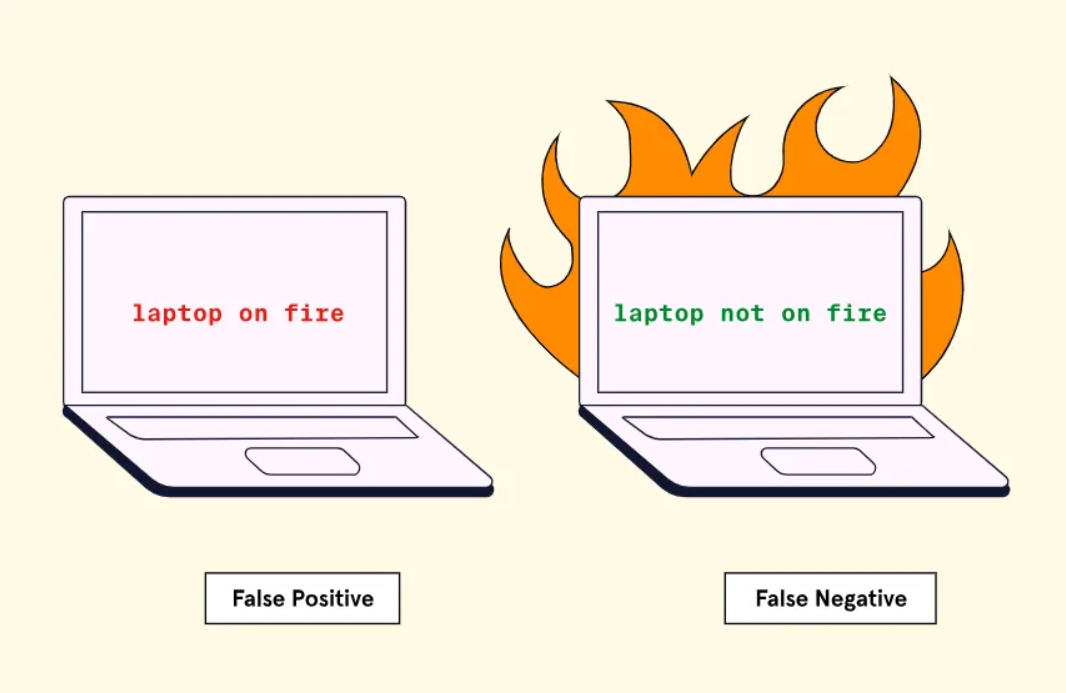
While conducting software tests, environmental and human factors can lead to unexpected test results. However, not all of these unexpected outcomes indicate defects. For instance, environmental factors such as electromagnetic fields, pollution, and radiation can cause certain issues in software and hardware, affecting the software’s proper functioning. Consequently, test results may be negatively impacted by these factors. Unexpected test results can also occur due to human errors in the test execution or in the test data itself.
These test outcomes, reported as defects despite not being actual defects, are referred to as false positives. False positives can be especially significant in sensitive systems (such as medical devices and security systems) as they can create a false perception that an event has occurred, potentially leading to unnecessary alerts, costs, and even security vulnerabilities. Therefore, identifying and addressing such cases in software testing is essential.
Test results that fail to detect defects due to environmental and human factors are called false negatives. This refers to situations where a test does not yield the expected outcome and overlooks a defect. Like false positives, false negatives are also crucial in the software testing process because they can ignore real hazards. Thus, identifying and eliminating false negatives is particularly important in safety-critical or critical systems within the software testing process.